

Introduction
Moving to the sunny shores of the United Arab Emirates is an exciting adventure. If you have a furry family member, bringing them along is a top priority. However, relocating a pet from the UK or Europe to the UAE involves strict government regulations, precise veterinary timelines, and specialized hardware. Navigating this process successfully requires careful planning, especially when dealing with airline approved crates and mandatory blood tests.
Understanding the UAE Pet Import Regulations
Moving pets to the United Arab Emirates requires strict adherence to Ministry of Climate Change and Environment (MOCCAE) rules. Both the UK and European countries are classified under specific rabies risk categories. Understanding these classifications dictates your veterinary timeline and import permit requirements. Before booking any flights, you must secure an official import permit from the UAE government. This permit remains valid for thirty days, meaning your timing must be precise. Furthermore, your pet must be at least four years old to enter the UAE in some specific contexts, though standard microchipped dogs and cats usually qualify from 15 weeks onward after rabies vaccination. Planning ahead prevents costly delays at cargo terminals.
Microchipping and Rabies Vaccination Protocols
Every successful pet relocation starts with a microchip. Your pet must have an ISO-compliant microchip implanted before or at the same time as their rabies vaccination. If the microchip is not ISO 11784 or 11785 compliant, UAE customs officials may deny entry. Following microchipping, your pet needs a current, valid rabies vaccination. If your pet received a vaccine prior to the microchip, it does not count. You must repeat the vaccination after microchip implantation to satisfy strict international standards. Always record the microchip number on every single veterinary certificate, lab submission form, and health document. Consistency in your paperwork prevents bureaucratic headaches at the border.
The Crucial Rabies Neutralising Antibody Titre Test
One of the most stressful parts of pet relocation from the UK or Europe to the UAE is the blood test. The UAE requires a Rabies Neutralising Antibody Titre Test (RNATT) for pets traveling from certain regions. This test proves that your pet’s rabies vaccination has generated an adequate level of immunity. Blood must be drawn at least 21 days after the rabies vaccination. The sample must be sent to an approved EU-certified laboratory for analysis. The antibody level must be at least 0.5 IU/ml to pass inspection. You must wait a mandatory waiting period of 90 days from the date the blood was drawn before your pet can legally enter the UAE. Skipping this waiting period or failing the test will result in immediate rejection or quarantine upon arrival.
Selecting the Right Airline Approved Crates
Your pet’s comfort and safety during the flight depend heavily on their travel container. Airlines enforce strict regulations regarding pet carriers, often following International Air Transport Association (IATA) live animal guidelines. An airline approved crate must be large enough for your pet to stand up, turn around, and lie down comfortably in a natural position. Wooden crates, wire mesh cages, and collapsible plastic kennels are strictly prohibited by commercial airlines. The crate must feature sturdy plastic construction, metal nuts and bolts securing the top and bottom halves, and a secure metal spring-lock door. Ventilation must be present on at least three sides for domestic routes and all four sides for international long-haul flights. Preparing your pet weeks in advance by letting them sleep and eat inside the crate reduces travel anxiety significantly.
Preparing Health Certificates and Endorsements
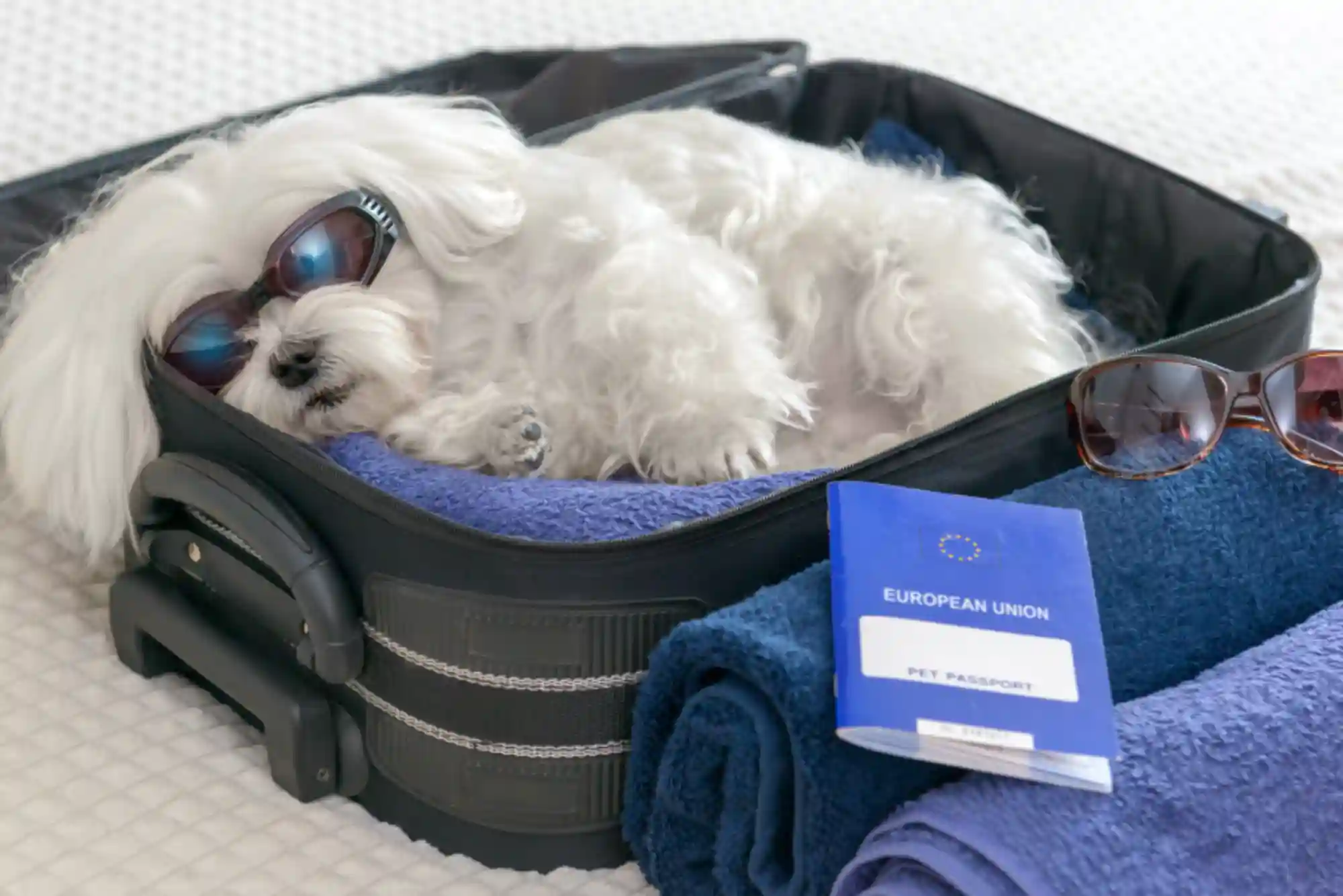
Documentation is the backbone of any international pet move. Once your blood test waiting period is complete and your crate is ready, you need a government-endorsed health certificate. Veterinarians in the UK or Europe must issue an EU pet passport or an official health certificate within ten days of travel. This document must state that your pet is clinically healthy, free from infectious diseases, and fit to fly. For UK departures, the certificate requires official endorsement from the Animal and Plant Health Agency (APHA). For European departures, your local state or national veterinary authority must stamp and sign the paperwork. Arriving in the UAE with unverified or missing signatures will lead to your pet being held in quarantine at your own expense.

Booking Flights and Managing Cargo Logistics
Pets traveling from the UK or Europe to the UAE generally cannot fly in the passenger cabin unless they are certified service dogs. Most cats and dogs must travel as manifest cargo in a temperature-controlled, pressurized hold. Direct flights are always the best option to minimize stress and transit times. Airlines like Emirates, Etihad, and British Airways have robust animal handling procedures. You must book your pet’s cargo space well in advance, as airlines limit the number of live animals per flight. Coordinating ground transport to the departure airport ensures your pet arrives relaxed and on time for cargo check-in, customs clearance, and security screening.
Arrival and Customs Clearance in the UAE
Landing in the UAE marks the final leg of your relocation journey. When your flight touches down in Dubai or Abu Dhabi, your pet is transferred to the animal reception center or cargo terminal. UAE veterinary officials will inspect your pet, check their microchip against the import permit, and review all original health certificates and vaccination records. If everything matches correctly, customs officials release your pet for pickup. Having a professional pet relocation agent on the ground in the UAE can speed up this process immensely. Once cleared, you can finally reunite with your furry friend and welcome them to their new desert home.
Frequently Asked Questions
What is the main requirement for pet relocation from the UK or Europe to the UAE?
The main requirements include an ISO microchip, a valid rabies vaccination, a passing rabies titre test with a 90-day waiting period, an official UAE import permit, and an endorsed health certificate.
How long does the rabies titre test take to process?
Processing times vary by laboratory, but results typically take between one to three weeks. However, remember that you must wait 90 days from the blood draw date before entering the UAE.
Are wire crates allowed for flying pets to the UAE?
No, airlines and the IATA strictly prohibit all-wire crates. You must use a rigid plastic, airline approved crate with metal hardware and secure locking mechanisms.
Can my pet travel in the cabin with me to the UAE?
Commercial airlines do not permit pets in the passenger cabin for flights into the UAE, except for officially recognized service animals. All other pets travel safely in the climate-controlled cargo hold.
What happens if my pet’s paperwork has an error upon arrival?
Any discrepancies, missing stamps, or expired timeframes can result in your pet being refused entry, delayed in holding facilities, or potentially deported back to the country of origin at your expense.
Conclusion
Relocating your pet from the UK or Europe to the UAE is a detailed process that demands patience, precision, and careful planning. By understanding government regulations, securing a valid import permit, completing the mandatory rabies titre test, and investing in an airline approved crate, you pave the way for a safe journey. Do not leave these critical steps until the last minute. Start your veterinary timeline early to avoid unnecessary stress for both you and your pet. If you feel overwhelmed by the paperwork, consider partnering with a professional pet relocation agency to handle the logistics. Take the first step today by scheduling your pet’s microchip check and veterinary consultation to begin your exciting new chapter in the UAE together.