
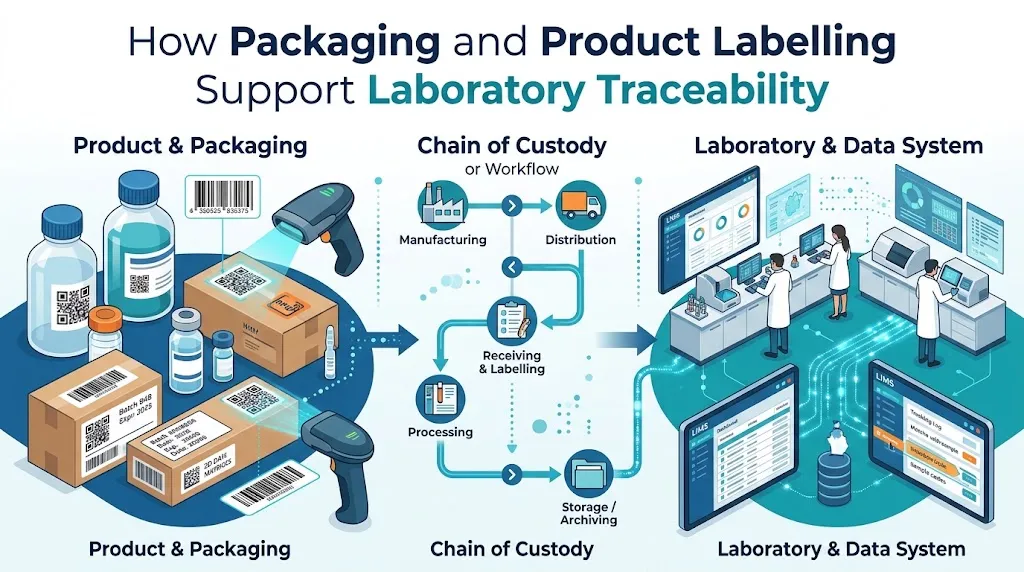

Packaging and product labelling play an important role in identifying and documenting laboratory research materials. Clear labels help researchers distinguish between products, connect physical containers with supporting documents, and maintain accurate records throughout the material’s lifecycle.
For laboratories reviewing materials supplied by Remy Research, understanding the relationship between product packaging, identification details, and available documentation can support more consistent receiving and inventory procedures.
1. Why Packaging Matters in Laboratory Research
Packaging is the physical presentation and protection of a material during storage, handling, and transportation. It also provides an important surface for displaying identification and handling information.
Depending on the product, packaging may include:
- Primary containers holding the material.
- Secondary protective packaging.
- Outer shipping packaging.
- Product identification labels.
- Handling or storage information.
Each packaging layer may serve a different purpose. Laboratories should distinguish between information printed on the product container and information supplied separately through shipping or product documentation.
Packaging appearance alone does not establish product identity, composition, purity, or analytical quality.

2. The Role of Product Labels
Product labels provide identification information that helps users distinguish one material from another.
Depending on the supplier’s labelling system, relevant details may include:
- Product or material name.
- Product reference or catalogue number.
- Batch or lot number.
- Container identification.
- Quantity or package information.
- Storage or handling information.
- Research-use-only statement.
- Supplier identification.
The exact information available may vary by product and packaging format.
Laboratories should review labels alongside the accompanying documentation rather than relying on a single printed detail.
3. Understanding Batch Numbers on Product Packaging
A batch or lot number is an important reference for connecting a product with its associated production or supply documentation.
It helps distinguish between different batches of materials that may share the same product name.
When recording a batch reference, laboratory staff should check that:
- The number is readable.
- The reference is recorded accurately.
- It is not confused with an internal sample identifier.
- Supporting documents use a matching or clearly mapped reference.
- Any discrepancy is documented.
A batch number is an identification reference. It does not independently demonstrate analytical quality or establish that testing has been performed.
4. Connecting Packaging Labels with Laboratory Records
A laboratory’s internal recordkeeping system should provide a clear connection between the physical container and its corresponding documentation.
This may involve recording:
- Internal sample identification.
- Product name.
- Supplier reference.
- Batch or lot number.
- Receipt date.
- Packaging condition.
- Associated document references.
For example, a laboratory may assign an internal sample number to a received container while retaining the supplier’s original batch number in a separate field.
This distinction helps prevent confusion between laboratory-generated identifiers and supplier-provided references.
5. Packaging Formats and Identification Requirements
Research materials may be supplied in different packaging formats. Each format can present different labelling and identification considerations.
Common examples include:
Vials: Labels may need to fit on a relatively small container while remaining readable.
Pre-filled pens: Identification may appear on the device, its packaging, or accompanying documentation.
Outer cartons: These may provide additional product and shipment references.
Protective packaging: This may contain shipping information that should be distinguished from the actual product label.
Regardless of format, laboratories should ensure that the relevant identification details can be connected to their internal records.
6. Product Labels and Research-Use-Only Identification
Research-use-only materials should be clearly distinguished from products intended for clinical or consumer use.
A research-use-only label communicates the intended research context of the material. It should not be interpreted as evidence of approval for human or veterinary use.
Researchers should review the product description and relevant documentation to understand the stated intended use and applicable limitations.
All materials discussed in this article are for in-vitro laboratory research only and are not intended for human or veterinary use.
7. Reviewing Labels and Documentation for UAE Research Materials
When laboratories source Peptide Supplier UAE materials, product identification should be reviewed together with the available supplier and analytical documentation.
The receiving process may involve comparing the product label with:
- Supplier order information.
- Delivery documentation.
- Product descriptions.
- Batch or lot references.
- Available certificates or analytical reports.
- Internal sample records.
Any mismatch should be recorded and clarified before the relevant documentation is treated as complete.
A matching product name alone is not sufficient to establish that a report relates to a particular physical container.
8. Packaging Condition During Receipt
The condition of packaging at the time of receipt should be documented objectively.
Receiving personnel may inspect whether:
- The outer package is intact.
- The product container appears undamaged.
- Labels are readable.
- Relevant seals or closures appear intact.
- The received package matches the expected shipment.
- Any visible irregularities are present.
These observations should be recorded according to the laboratory’s procedures.
An intact package does not independently confirm the material’s identity, purity, or storage history.
9. Maintaining Label Readability
Labels can become difficult to read because of handling, environmental exposure, packaging damage, or normal wear.
Laboratories should maintain procedures for addressing unclear or damaged labels.
Appropriate recordkeeping may include:
- Recording the original visible information.
- Identifying the affected container.
- Documenting the issue.
- Referencing supporting supplier documents.
- Recording any approved relabelling activity.
- Maintaining the relationship between the original and replacement identification.
Staff should never guess missing product or batch information.
10. Digital Identification and Barcode Systems
Some laboratories use digital inventory systems, barcodes, or QR codes to improve material identification.
These systems can help connect physical packaging with electronic records.
Depending on the system, a barcode or QR code may link to:
- Internal sample records.
- Product information.
- Batch references.
- Receipt details.
- Storage locations.
- Supporting analytical documents.
Digital identification should complement, rather than replace, appropriate physical labelling and recordkeeping.
Laboratories should also ensure that electronic records are accessible to authorized personnel and maintained according to internal data-management procedures.
11. Common Packaging and Labelling Mistakes
Several issues can weaken laboratory traceability:
- Recording an incorrect batch number.
- Confusing internal sample IDs with supplier references.
- Using labels that are difficult to read.
- Separating product containers from their documentation.
- Assuming that similar packaging means identical material.
- Treating packaging appearance as proof of analytical quality.
- Failing to document damaged or replaced labels.
- Not updating records after a change in packaging or identification.
Consistent receiving and review procedures can help reduce these problems.
12. Packaging and Labelling Review Checklist
Laboratory personnel can use this checklist when receiving research materials:
- Is the product name clearly identifiable?
- Is the supplier reference recorded?
- Is the batch or lot number readable?
- Is the package condition documented?
- Are storage or handling details available where applicable?
- Is the research-use-only status clearly stated?
- Does the label match the available product documentation?
- Are analytical reports linked to the correct reference?
- Are internal sample identifiers recorded separately?
- Have any labelling discrepancies been documented?
The checklist should be adjusted to the laboratory’s internal requirements and the type of material received.
Conclusion
Packaging and product labelling provide important identification information for laboratory research materials. When labels are readable, batch references are recorded accurately, and supporting documents are properly connected, laboratories can maintain clearer material histories.
However, packaging and labels should always be considered alongside supplier documentation and relevant analytical records. They support identification and traceability but do not replace independent testing or establish scientific quality by themselves.
All materials discussed in this article are strictly for research-use-only and in-vitro laboratory research. They are not intended for human or veterinary use, diagnosis, treatment, or administration.